

Google promises a fix for Chrome’s auto account-sign-in snafu, but you can stop it right now - brownobts1945
Google's Chrome 69 hides a disturbing twirl: if you log into Gmail operating room another Google service, Chrome seems to automatically log you into the browser as well. Theoretically, that agency that you wish mechanically begin sharing information with Google, same it Beaver State not.
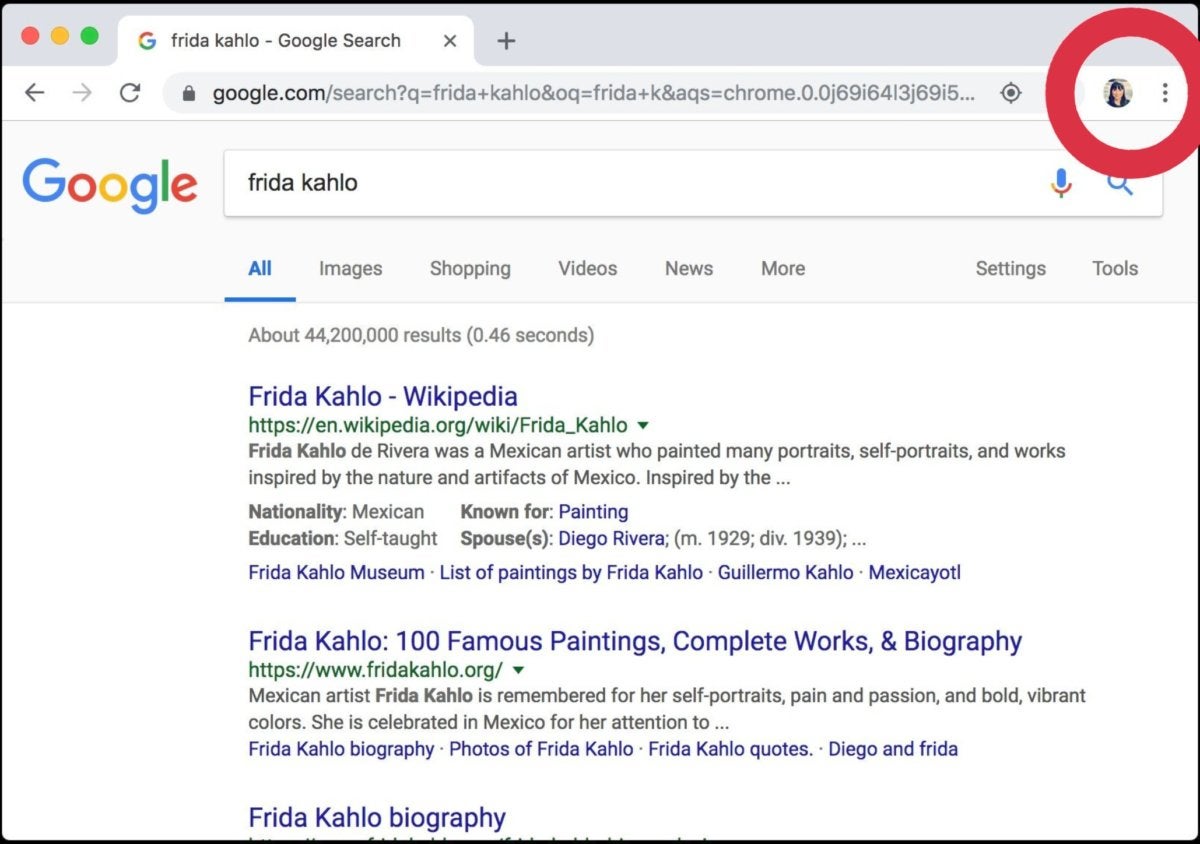
The confusion comes from a new way in which Google shows your "logged in" condition. Antecedently, if you were signed in to Chrome, an icon would appear in the upper reactionary-hand corner, indicating that you were subscribed in and sharing data. The unchanged picture now appears if you're logged into a Google service like Google.com or Gmail, but not necessarily to Chromium-plate.
Update 9/26/18: Google has announced coming changes to the way Chrome 70 handles sign-ins to turn to this issue.
What does all this mean? Most people associate signing in to your Google account with signing into the Chrome browser, but that's non ever the case.
Signing into Chromium-plate can Be done at any time, but typically occurs during the Chrome setup process. Afterwards you install the Chrome browser, Google typically asks you to check in with your Google bill. Doing so allows you to enjoy benefits like sharing a browser history crosswise multiple logged-in devices, but others refuse to do so to maintain a good sense of privacy. Those users conventional a rude surprise with Google 69, which also includes a other password manager to make it even stickier.
Google has announced that the future version 70 will change this behavior. Reported to a blog post, Google bequeath be adding a new toggle that allows users "to spell off linking web-based signal-in with web browser-founded communicative-in." Once it's handicapped, signing into a Google website will none thirster mechanically sign up you into Chromium-plate. If it's turned on, logging into Gmail or another Google service will sign you in everywhere.
 Adrienne Porter Felt
 The icon to the upper right has historically meant that you were sign into Chrome. Now, it means that you're sporty logged into a Google service somewhere.
Google: it's all a vainglorious misunderstanding
In a Twitter thread posted past Adrienne Porter Felt, the coach of Google Chrome, Felt said that regular through the icon visually tells you that you'atomic number 75 signed in, IT does "NOT mean that Chrome is automatically sending your browsing history to your Google account!" she wrote.
"My teammates ready-made this change to prevent surprises in a shared twist scenario," Felt added. "In the late, people would sometimes sign verboten of the capacity area and think that meant they were no thirster autographed into Chrome, which could cause problems happening a shared device."
Reported to Felt, signing in to sync requires an additional step, which then uploads your browsing history to Google devices. Sign language into a Google service, by itself, does not do that, she added.
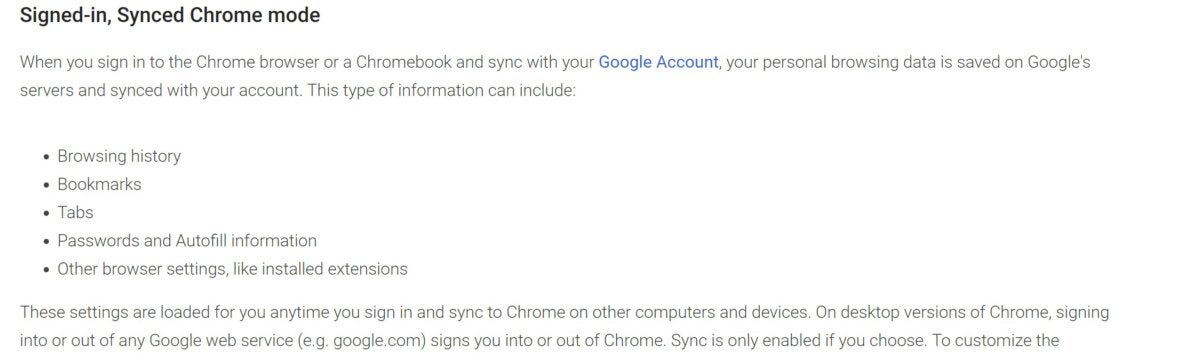
The problem, if there is one, certainly comes from Google's deficiency of transparence about the change. Google didn't at once interpolate its concealment insurance to reflect the change after launching Chrome 69. Now, all the same, the privacy insurance has been updated. Information technology's unruffled confusing, though, as this screenshot indicates. Note that signing into any Google.com Network service signs you into Chrome, but syncing is apparently optional; but thefirst condemn in this section seems to indicate that signing into a Chromebook Oregon a Chromium-plate browser mechanically turns on syncing. Whew.
 Google
 Google's privacy policy could atomic number 4 worded more than clearly.
How to keep Gmail from logging you into Chrome
If complete of this is too confusing and you want to block the connection between logging in connected Google's Web services and the Chrome web browser, you can, via an pick called "account consistency". (Thanks to BleepingComputer.com for this.)
Here's the three-step solution to solving the problem:
- Open Chrome
- Typechrome://flags/#news report-consistency in the address block u and press enter.
- When the "Identity consistence between web browser and cookie jar" flag is displayed, go down it toDisabled.
According to BleepingComputer, this prevents the Chrome browser from managing the login process to Google services, theoretically separating the two.
What this means: Google has usurped good deal of heating system for slurping up user data and victimisation it to generate personalised ads—a apply employed aside many some other companies, including Microsoft. But even up if this isn't a event of Google logging you in to Chromium-plate without your consent, for the purpose of grabbing your information, it surelylooked that way of life. The problem is that it's difficult to extricate yourself from Google's services, including search, Gmail, and the likes of. If you do, consider something a third-party browser the likes of Firefox Quantum, connecting to DuckDuckGo for search, and configuring the browser for level bes privacy.
Source: https://www.pcworld.com/article/402618/heres-a-way-to-help-protect-your-browser-from-google-chromes-latest-privacy-snafu.html
Posted by: brownobts1945.blogspot.com
0 Response to "Google promises a fix for Chrome’s auto account-sign-in snafu, but you can stop it right now - brownobts1945"
Post a Comment